


Is a townhouse a good first home in NZ?
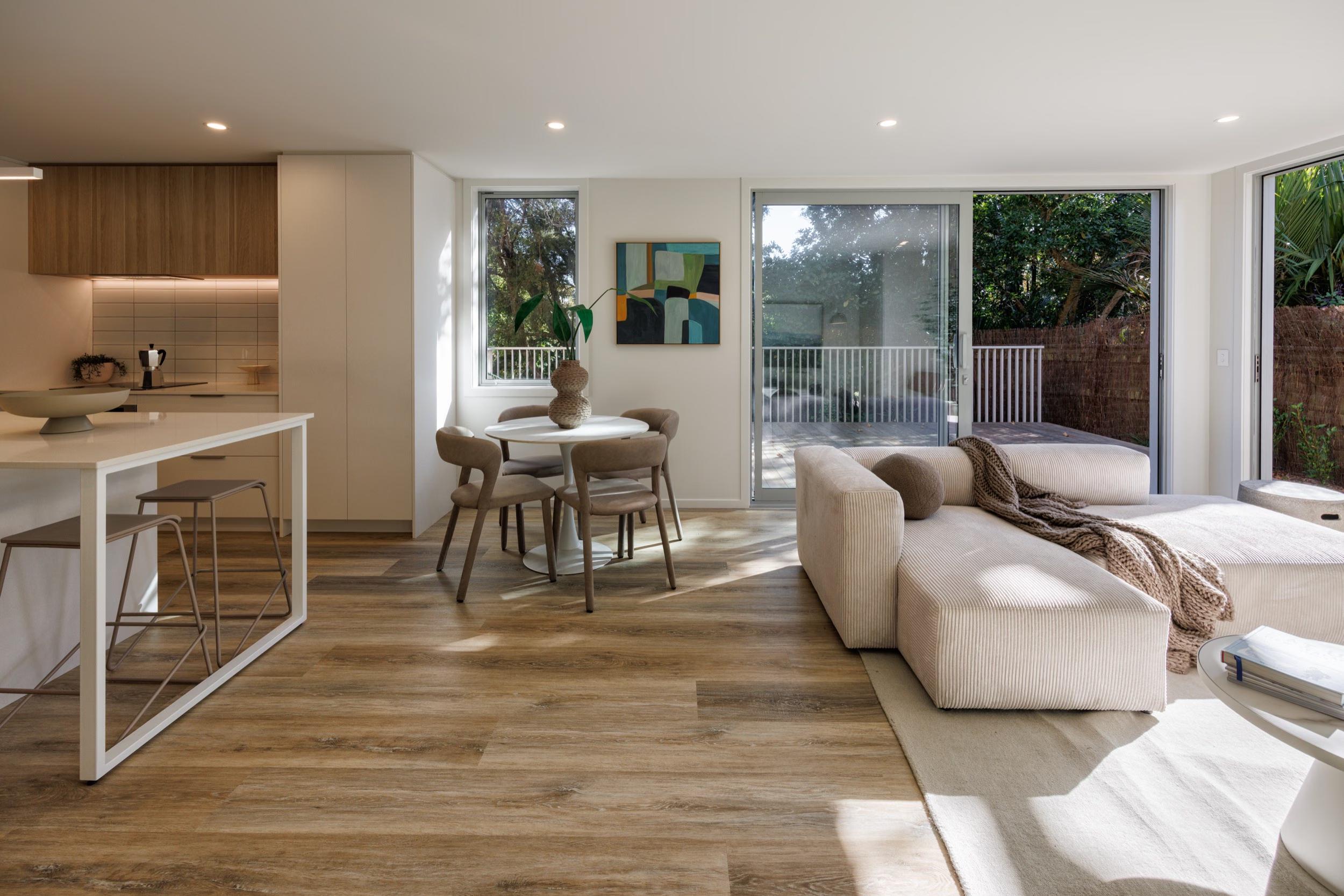

For a lot of first-home buyers in Wellington and the Hutt Valley, yes. A townhouse gets you into your own home sooner, in the suburb you want, in a home that is finished and ready to live in from the day you get the keys.
A lower entry price, a smaller deposit, nothing to fix, and low running costs. That combination is why townhouses have become one of the most sensible ways to buy a first home in New Zealand.
You buy in the suburb you want
Townhouses use land efficiently. Several homes sit on a site that would otherwise hold one, and they share infrastructure like driveways and services. That brings the entry price below a comparable standalone house on the same street.
For a first-home buyer, that changes the map. Instead of stretching for an older place further out, you can buy closer in, near the train, inside the school zones you want, in a home that is brand new.
Location is the one thing you can’t improve later. A townhouse is often what makes a good location affordable on a first-home budget.
The deposit can be smaller than you expect
New builds have generally been treated differently from existing homes under lending rules, which has meant banks can often lend on a smaller deposit than they would on an older property. There are also Kāinga Ora backed low-deposit options for eligible buyers.
KiwiSaver does a lot of the work here too. If you have been a member long enough and you are buying a home to live in, you can usually withdraw most of your balance towards your deposit. For plenty of first-home buyers, that withdrawal is the deposit.
We have gone through the numbers in how much deposit first home buyers need and what support is available to first home buyers.
Brand new, warm and dry
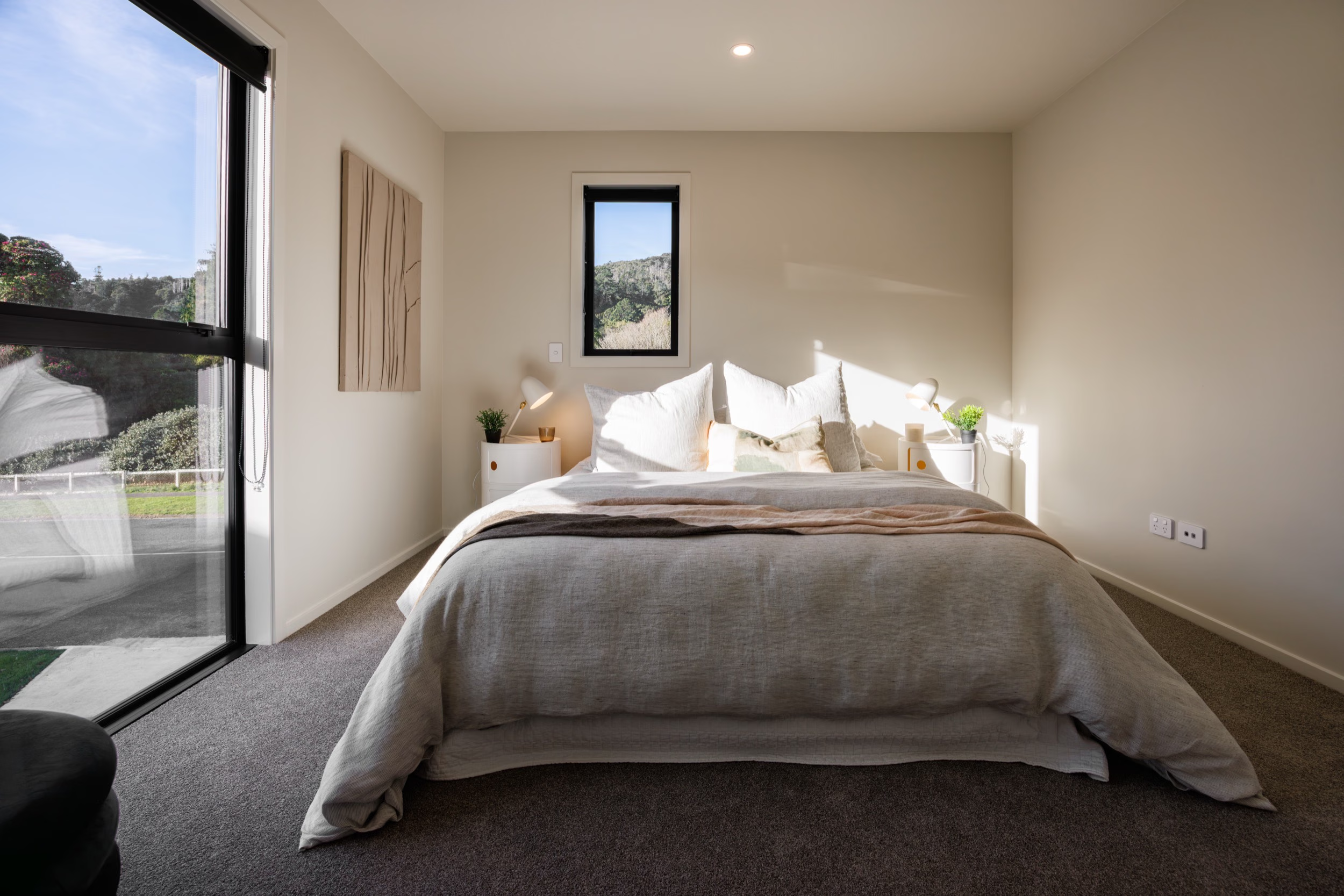
A modern townhouse is built to current insulation and weathertightness standards, double glazed, and designed to hold its heat.
It also shows up in what you are not doing: no roof to replace in year three, no rewiring, no drainage to dig up, no damp room you can’t fix. Everything is new, and new comes with warranties behind it.
Buying brand new also means nobody else has made the decisions for you. The kitchen, the bathroom, the layout and the insulation are all current, not somebody’s renovation from fifteen years ago.
Easy to look after means your weekends are your own
A new home gives you your Saturdays back. Nothing to repaint, nothing to re-roof, and no section that swallows half a day every fortnight.
First-home buyers tend to underrate this until they have lived it. If you’re buying while working full time, or with young children, the difference between a home that needs you and a home that looks after itself is worth more than it sounds on paper.
Turnkey, at a fixed price
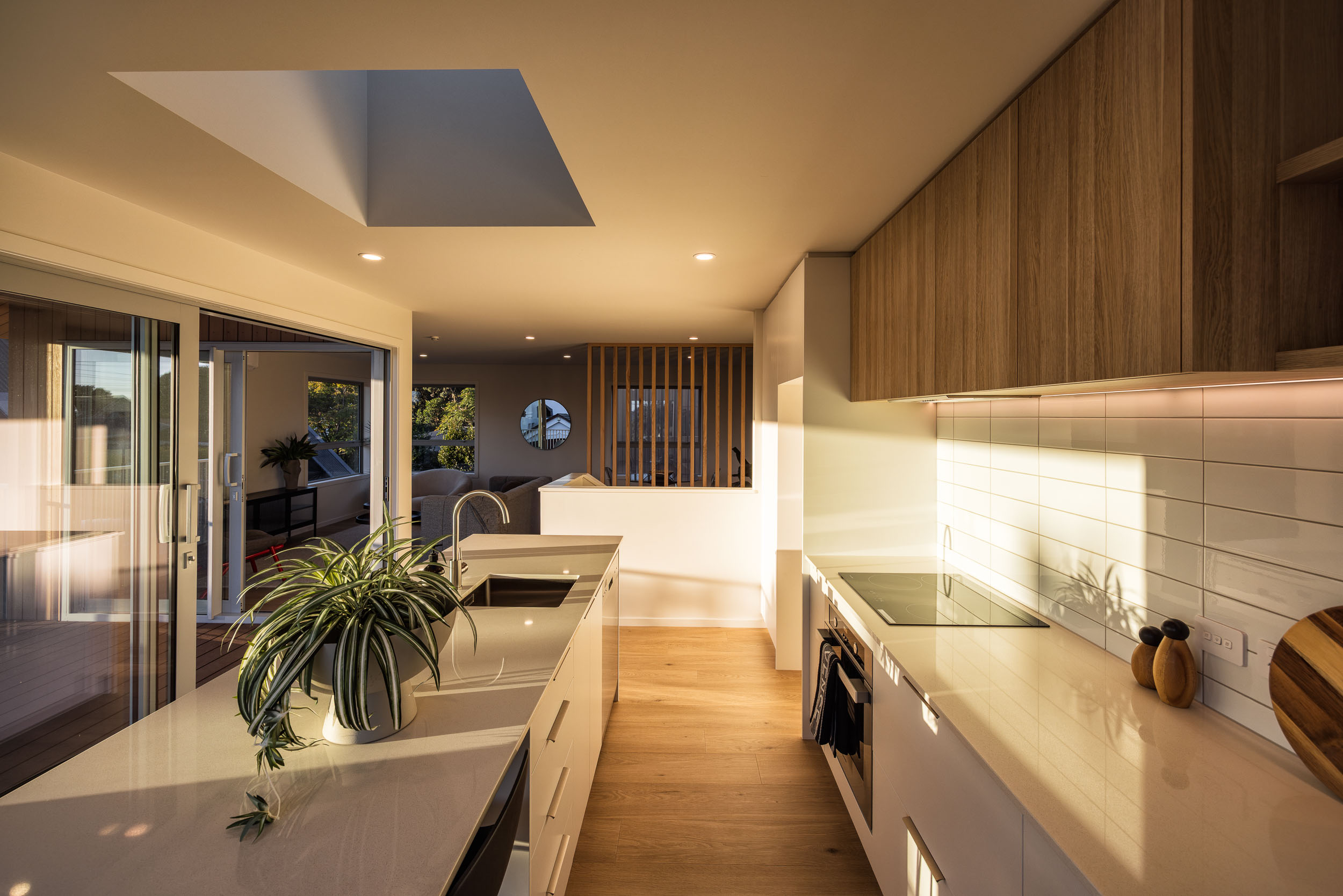
A turnkey townhouse is sold finished. Kitchen in, flooring down, driveway sealed, landscaping done, ready to move into. You are not project-managing a build, not funding it in stages, and not finding costs you did not plan for partway through.
The price is set before you commit and it does not move. There is no auction, no bidding against strangers, and no going in blind on the day. The price you see is the price you pay, which for a first-home buyer working to a deposit and a pre-approval is the whole ball game.
Good school zones, close to the train
A townhouse in Avalon or Waterloo puts you within a short walk of a train station and inside school zones that matter, at a price a standalone house on the same street would not match.
That combination of a new home, a good zone and a short commute is difficult to find in an older standalone house on a first-home budget. It is the single strongest argument for buying a townhouse first.
If you are weighing up suburbs, we have compared them in Lower Hutt vs Upper Hutt.
They hold their value, and they rent well
Townhouses sit at the more affordable end of most suburbs, which tends to be the part of the market with the most buyers competing. That supports resale when you come to move on.
They also rent well, because the things that make a townhouse an easy first home make it an easy rental: easy-care, warm, close to transport.
Is a townhouse the right first home for you?
If you want to stop renting sooner, buy in a good location, and spend your weekends living in your home rather than working on it, a townhouse is a strong first home.
If you want to see what that looks like, our available townhouses are sold finished, at a fixed price, with no auction.
Common questions
Are townhouses cheaper than standalone houses?
Usually. Townhouses use land efficiently and share infrastructure, so the entry price is lower than a comparable standalone house in the same suburb.
What is the difference between a house and a townhouse?
A townhouse is an attached or semi-detached home, often part of a multi-home development. Townhouses are usually newer, lower maintenance and more affordable than a comparable standalone house in the same street.
What does turnkey mean?
Turnkey means the home is sold finished and ready to move into at one fixed price. Kitchen, flooring, driveway and landscaping are all complete before you get the keys.
Do new builds need a smaller deposit?
Often, yes. New builds have generally been treated differently under lending rules, and there are Kāinga Ora backed low-deposit options for eligible buyers. Your bank or mortgage broker will confirm what applies to you now.
Can I use my KiwiSaver to buy a townhouse?
Generally yes, if you have been a KiwiSaver member long enough and you are buying a home to live in. Check the current membership requirement and the minimum balance you leave in the account with your provider.
Freehold or unit title, what is the difference?
Freehold, also called fee simple, means you own the land and the building outright. Unit title means you own your home plus a share of the common areas. We have explained both in freehold vs unit title.
Is a townhouse a good investment if it is also my first home?
It can be. Affordability and steady tenant demand support both resale and rental value. Get advice on the tax position before treating a home you bought to live in as an investment.
Click here for more First Home Buyer frequently asked questions.
Read more customer stories
Explore more resources
Explore more new and updates
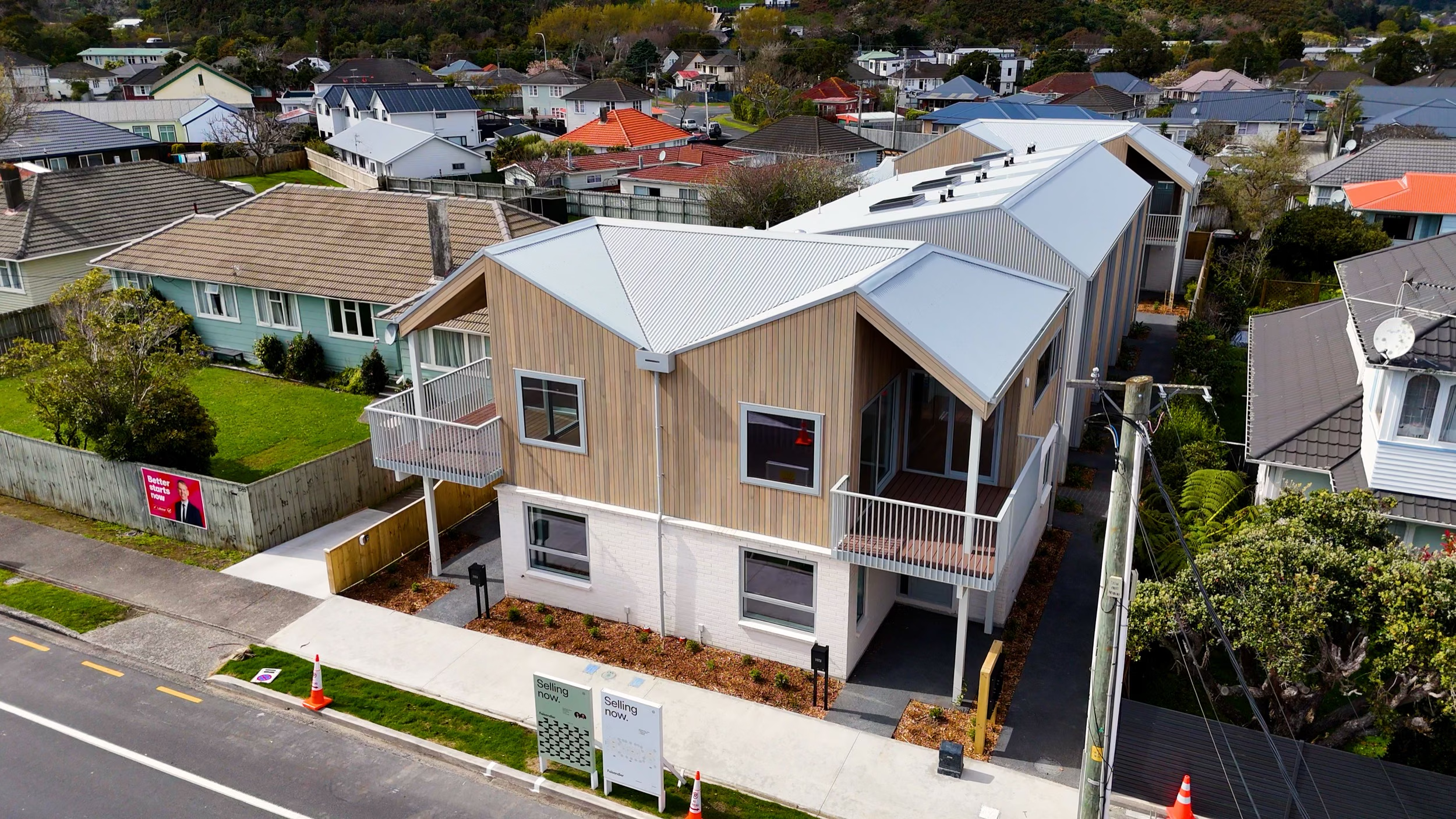
September build update
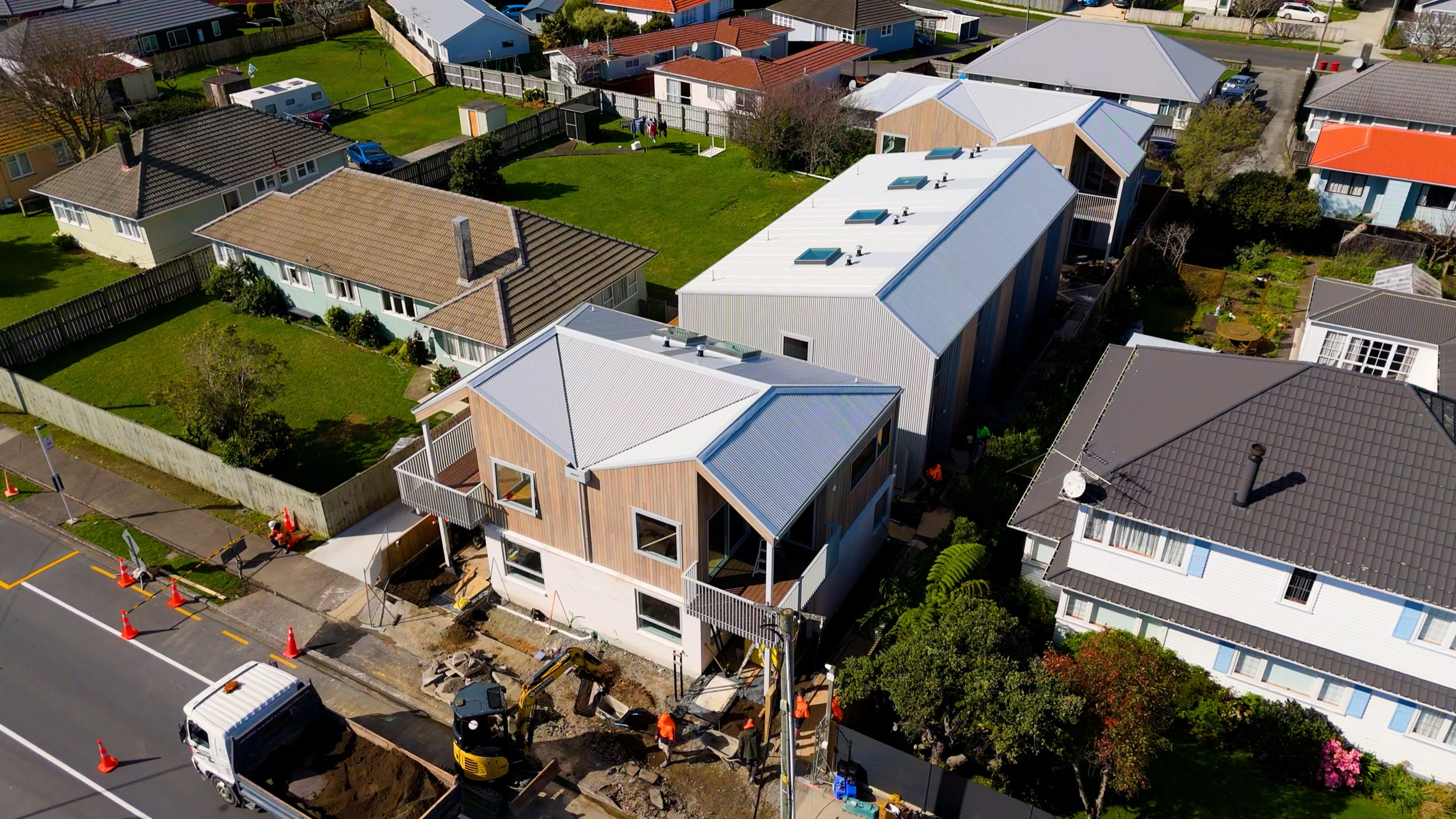
August build update
Are townhouses cheaper than standalone houses?
Chat with our team about current availability and start your journey home today.
Contact us